

Rigid Aesthetics of Dry Ice Industry | Hefengli HR2000E Block Pressing Machine - The Anchor of Cold Chain Logistics
The image is created by AI and differs from the actual product
In the world of cold chain logistics, time is money and temperature is life. Have you ever encountered the embarrassment of using dry ice, but the goods melted when they arrived? Do you think there isn't enough dry ice? wrong! Perhaps your dry ice cubes are not hard enough.
Today, what we're going to talk about is not how to use dry ice, but how to make a tough guy grade dry ice. Behind this lies a hard indicator of a machine - rigidity.
01
The birth of a hard core dry ice: perseverance with a density of 1.5g/cm ³
The common 500g dry ice cubes on the market are usually 125 * 105 * 26mm in size. But did you know? The same 500g, the density determines its fate.
According to actual measurement data, the density of dry ice is directly related to pressure:
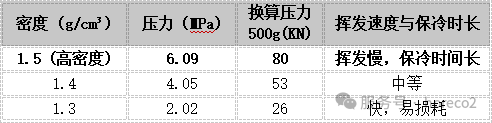
There is only one truth: the higher the density, the tighter the molecular arrangement, and the slower the volatilization. In cold chain logistics transportation, a piece of dry ice with a density of 1.5g/cm ³ can keep cold for several hours longer than ordinary dry ice, which is the real money saving tool.
02
The hardness of the machine: Where does the confidence of 1500KN come from?
Hefengli HR2000E dry ice compactor
What does it rely on to squeeze out 1.5g/cm ³ of dry ice? It is a pressure of sufficient strength. The Hefengli HR2000E block press can press 16 pieces of 500g dry ice at a time, which means that the cylinder thrust must reach 1280KN (F=16 * 80=1280KN).
Hefengli's choice:
Equipment with a direct hydraulic cylinder thrust of 1500KN! We are well aware that it is not advisable for equipment to work at the extreme edge for a long time. In order to ensure stability, Hefengli equipment directly maximizes the safety factor and chooses a configuration of 1500KN. This is like pulling goods with the chassis of a truck, which is as stable as Mount Tai.
Some peers' choices:
The thrust of the oil cylinder is only 600-800KN. It's like pulling a container with a small car. Although it can also move, can the equipment withstand it in the long run?
03
Hardcore testing: experimental comparison of different rigidity
To verify the importance of rigidity, we conducted repeated experimental tests.
Hefengli Plan:
Result:
① Maximum stress: 259Mpa (far below the yield limit of 355Mpa for 45 steel, with a safety factor of 1.37).
② Maximum deformation: only 0.6mm.
③ Status: The guide column is subjected to positive tension and not bending moment, avoiding fatigue fracture. The machine is as stable as a rock and has a worry free lifespan of several years.
Image: The maximum stress is 259MPa, and the frame plates and guide columns are mostly made of high-quality carbon steel with a yield limit of 355Mpa and a safety factor of 355/259=1.37
Image: The maximum deformation is 0.6mm, and the guide column bears almost no bending moment, which is a positive tensile force, ensuring the service life of the guide column and avoiding fatigue fracture.
Other manufacturers' proposals:
Result:
① Maximum stress: 837Mpa! This has exceeded more than twice the yield limit of the material.
② Maximum deformation: 3.4mm.
③ Status: The oil cylinder mounting plate has exceeded the yield limit of the material, and long-term use under high pressure can easily damage the equipment. The guide column not only has to bear pressure, but also has to withstand huge additional bending moments. Fatigue fracture is only a matter of time.
Image: The maximum stress is 837mpa, and the frame plates and guide columns are mostly made of high-quality carbon steel with a yield limit of 355Mpa. The middle oil cylinder mounting plate has exceeded the material's yield limit, and long-term use under high pressure will inevitably damage the equipment. Only by reducing the density of dry ice can the thrust of the oil cylinder be reduced.
Image: The maximum deformation is 3.4mm, and the guide column bears additional bending moments, greatly reducing its reliability and making it prone to fatigue fracture.
Key points:
When the rigidity of the equipment is insufficient, the risk of guide column fracture is extremely high. In the peak season of cold chain logistics, once the equipment collapses, the cost of downtime, labor and time for parts replacement is much more expensive than the price difference of a good equipment!
04
Why do we need to pay attention to peak season risks?
The current dry ice production has distinct seasons. When the peak season comes, it is often a 24-hour uninterrupted production for a month.
·Total weight of equipment: Our equipment weighs 4000kg, while some manufacturers only have 2/3 or even 1/2 of ours. There is a huge difference in materials used, and reducing materials will greatly reduce the rigidity, strength, and stability of the equipment.
·Safety factor: We choose a high standard of 1.2-1.5 to cope with the uninterrupted production pace during peak season, ensure the stability of the equipment, and avoid fatigue fracture.
Conclusion
Dry ice compactor is not just a machine, it is the first line of defense on your cold chain logistics chain.
When choosing equipment, one should not only consider the price, but also the toughness. 1500KN thrust, 4000kg weight, 1.37 times safety redundancy Behind these hardcore data lies our unwavering commitment to the word 'quality'.
If you don't want to be overwhelmed by equipment failures during peak seasons, and if you don't want to increase transportation costs due to dry ice evaporating too quickly, remember: density determines the cooling time, and rigidity determines the lifespan of the equipment.
-
No. 18 Xinling Road, Houxi Industrial Park, Jimei District, Xiamen, China
-
+86 592 6220885
-
+86 592 6220886
©2024 Xiamen HORECO2 Dry Ice Cleaning Equipment Co., Ltd. All rights reserved Filing No.: Min ICP Bei 16035940 Hao-2 Police Filing: 35021102001157


